 |
|
|
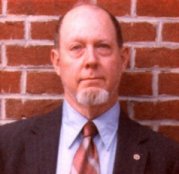
Jim Hedges, the editor of this web site and a life-long Prohibitionist, is running for school director in the Southern Fulton District, Fulton County, Pennsylvania. There are five seats open, four incumbents seeking re-election, and four challengers (two of whom have been school directors in the past). School boards in Pennsylvania are non-partisan, in that candidates usually cross-file in both the Republican and Democratic primaries. The five major-party candidates selected at the primary ordinarily would be assured of winning at the general election. However, Hedges' entry into the race as an independent raises the possibility that one of the five primary winners may be defeated in the Fall. Hedges is 61 and has been a resident of the Southern Fulton District for 27 years. He has been active in community organizations and in local issues; he is as well-known to the voters as are the major party candidates. This is his first try for public office. Hedges has degrees in musical performance (BA-Iowa) and in geography (MA - Maryland). He is a retired member of the United States Marine Band, Washington, DC and a former editor of The National Speleological Society Bulletin. He was Fulton County's first recycling coordinator and was twice named "Outstanding Individual Recycler" by the Pennsylvania Resources Council. For the past 10 years, he has covered local government for weekly newspapers. The candidate's Prohibition Party activities include appointments as delegate to annual meetings of the National Temperance and Prohibition Council, being a charter member of the Partisan Prohibition Historical Society, and public relations work. He became interested in the Prohibition Party when a freshman in high school, after reading some newspaper publicity. His goals as school director would be to maintain the academic quality of the school, to minimize the number and length of 'executive sessions' conducted by the school board, to resist further loss of local control of the school to the state and federal governments, and to limit increases in the school budget to the rate of growth in the district's tax base. He notes that it now takes three times as many man-hours to produce one high school graduate as it did 50 years ago. Most of this loss of efficiency has been caused by the increasing burden of state and federal regulations. Restoration of local control over local schools would result in large cost savings to the taxpayers by eliminating the educational bureaucracy. Jim and his wife Carolyn live quietly in rural Fulton County. They are active in conservative Protestant churches and enjoy their children and grandchild.
Hedges waged a strong write-in campaign at the primary, hoping to pick up one or both of the major-party nominations. This failed. He received only 3% of the vote, a total of 87. About 15% was needed to win. However, he caused the defeat of the incumbent school board president and enabled a Jewish candidate to win in a 'Bible-belt' district. It is very difficult for a write-in candidate to win when other candidates have their names printed on the ballot. In addition, Hedges ran as an independent, and major party voters who are sufficiently motivated to go and vote in their primaries are not likely to vote for an independent instead. The eight candidates in the school board race competed for five nominations in each party. The top five primary vote-getters in each party next fall will compete among themselves at the general election for the five open school board seats. All of the major-party candidates were cross-filed (dem/rep). The incumbent school board president, whose frequent executive sessions were criticized by Hedges during the campaign, failed by one vote to win a Democratic nomination. It is quite likely that Hedges deprived him of that vote, and his having only a Republican nomination in the fall will make it difficult for the board president to win re-election. The candidate who benefitted from the president's loss was a secular Jew, Kenny Wuertenburg. Nearly everyone in this Bible-belt district is an evangelical protestant. All of the other candidates were evangelicals. Did Hedges' presence in the election hurt Wuertenburg? That's unclear. Hedges did draw some of the few Catholic, Jewish, and secular votes to himself. However, the majority of his supporters were evangelicals (just as were the majority of everyone else's supporters). Wuertenburg would have needed an additional nine votes to move from 5th place to 3rd place. It's doubtful that Hedges had nine non-evangelical votes. It is likely, however, that by depressing the vote of the 6th ranking candidate, the board president, Hedges made it possible for Wuertenburg to with the 5th place Democratic nomination. As a result of Hedges presence in the race, the incumbent board president was able to win only a Republican nomination, and Wuertenburg did succeed in winning a Democratic nomination. This demonstrates, again, that third-party candidates can have a strong influence on public policy without actually winning the elections themselves. Hedge's campaign strategy relied heavily on poll workers handing out ballot stickers at each of the five precincts.(a 6th, very tiny precinct had only 6 voters and was ignored). This was only partly successful. Two precincts were covered most of the day, one precinct was covered half of the day, one precinct was covered for a few hours during the slowest part of the day, and the person assigned to the 5th precinct took sick and stayed at home. All but one of the poll workers lived in the school district; most of them lived in the precinct to which they were assigned. It was friends requesting the help of friends. The one 'foreign' poll worker did noticeably less well than the 'native' poll workers. In the two all-day precincts, Hedges received 34 and 28 votes. The half-day precinct gave him 17 votes. The 'foreign worker' precinct yielded only 6 votes, and there were two unsolicited votes recorded in the precinct with no poll workers. This suggests that, if all five precincts had been staffed all day by residents, Hedges would have received about 175 votes. That's enough possibly to have won-- the 5th ranking Democratic winner had only 165 votes. Hedges spent $405.53, including 33 cents /mile for 337 miles: a total of $4.66 per vote. That's an absurd amount to spend on a school board race, especially considering that he put in about 100 hours of labor in addition to the cash outlay. A full staff of poll workers would have reduced that to about $1.50 per vote, with little increase in the total expense. Some of the expenditures will benefit the fall general election, however, where Hedges will appear on the printed ballot as the Prohibition Party nominee. One also assumes that there were intangible 'party-building' benefits from the campaign.
"A wise and frugal government, which shall restrain men from injuring one another, which shall leave them otherwise free to regulate their own pursuits of industry and improvement, and shall not take from the mouth of labor the bread it has earned......this is the sum of good government" |
|