Temperance Towns
Some of the more prominent towns were Harriman, Tennessee (sponsored by John Fisk); Prohibition Park on Staten Island, New York; Colorado Springs, Colorado; and Demorest, Georgia (1889, sponsored by Nell and William Demorest).
Henry Ford's utopian rubber plantation in brazil included alcohol prohibition as well as free medical care and free schools. See: Grandin, Greg () -- Fordlandia: Metropolitan Books.
Pulliam, W.T. (1978) — Harriman, the Town that Temperance Built: 706pp, Harriman, privately printed.
The Union Colony of Colorado
The Union Colony of Colorado (also called the Greeley Colony and The Union Temperance Colony) was a 19th-century private enterprise formed to promote agricultural settlements in the South Platte River valley in the Colorado Territory. Organization of the colony began in October 1869 by Nathan Meeker in order to establish a religiously oriented utopian community of "high moral standards". The colony was founded in March 1870 at the site of present-day Greeley, Colorado. Union Colony was financially backed and promoted by New York Tribune editor, Horace Greeley, a prominent advocate of the settlement of the American West. The homesteaded colony greatly advanced irrigation usage in present-day northern Colorado, demonstrating the viability of cultivation at a time when agriculture was emerging as a rival to mining as the principal basis for the territorial economy.
In 1869 Greeley sent Meeker, then employed as the agricultural editor of the Tribune, to the Colorado Territory to seek out a location for a colony to promote settlement in the West. Meeker returned to New York City in the autumn of 1869, reporting that the South Platte Valley presented a good opportunity for the colony. In October, Meeker began organizing the enterprise, and on December 14, 1869, he placed an advertisement in the Tribune calling for volunteers to join him in the new venture. Meeker's advertisement specifically sought volunteers of high moral standards, who were literate and adherents to the tenets of the Temperance movements. The cost of membership for those accepted to the colony was set at $160. Of the more than 3000 people who responded, Meeker selected 700 applications as prospective colonists, ninety of whom later backed out.
The Colony's influence is recognized in the region's history. Greeley remained a dry municipality until 1972. As a result, several nearby towns grew more rapidly as a source of liquor; and at least two small towns, Rosedale, and Garden City, were established and incorporated largely to allow saloons, bars, and liquor stores to feed the demand of nearby University of Northern Colorado students and faculty.
Horace Greeley
-- All material borrowed from Wikipedia (30 April 2022)
East Lansing, Michigan
The City charter, signed in 1907, prohibited the sale of alcohol. The city council amended the charter in 1968 to allow the sale of alcohol.
The Chronicle of Higher Education
subsequently reported that students at Michigan State Uniersity University (located in East Lansing) led the nation in alcohol-related arrests. Frequent student riots since 1999, often in connection with football games, have made MSU a notorious "party school."

Demorest, Georgia
Demorest, Georgia was incorporated on 13 Nov 89 as a dry community. “In 1889, a group of people from Massachusetts, New Hampshire, Ohio, and Indiana moved to Georgia to found a community which would have high moral standards. They decided that anyone who permitted drinking alcoholic beverages, gambling, or prostitution would forfeit their property. [William Jennings] Demorest formed the Demorest Home, Mining, and Improvement Company to make that dream a reality. On November 13th, 1889 the town was incorporated and named “Demorest” in honor of the great Prohibition leader.”—Dec’03 National Statesman, p.4.
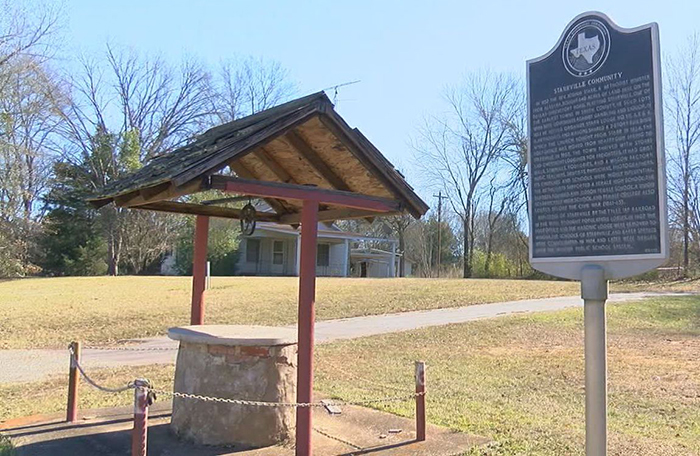
Starrville, Texas
Rev. Joshua Starr bought a section of land in northeast Texas in 1852, with the intention of developing a "dry" community. Located along the Dallas-to-Shreveport road, the village prospered with stores, hotels, mills, foundries, and a wagon factory.
Both the Methodists and the Baptists ran schools for girls, and there was a female college. It was a progressive, ambitious place to live.
And then, Starrville lost out. There was fierce competition for railway access after the Civil War, as the nation's railways expanded westward. The local railway was built through Winona, three miles away. Starrville businesses and community services migrated there, to take advantage of its now faster transportation, and the town withered away. All that is left of Starrville today is the town well historic site.
Temperance, Michigan
Temperance, Michigan was named by two of its earliest settlers, Lewis and Martha Ansted. The Ansteds wrote restrictions into the deeds for all of the property they owned, specifying that alcohol could never be sold there. Other early settlers followed their lead. The restrictions lasted about 100 years, then were repealed on the initiative of a local businesswoman. National Statesman, Feb'74.
Boulder, Colorado
Boulder, Colorado was once a strong-hold of the Prohibition Party.. Many Prohibition candidates were elected here in years past. Prohibitionists and WCTU members helped bring about a state-wide referendum in Colorado in the 1800s -- the first such plebiscite anywhere in the world. The question lost, state-wide, but Boulder County was the one county in which it carried.
Boulder was legally dry until the 1960s, and many religious and temperance publications hailed it as a shining oasis of morality and culture.
Then, the residents agreed to tolerate the sale of alcoholic beverages. In 1981, the State reported that 90% of all traffic deaths in Boulder were caused by alcohol.-- information from Earl F. Dodge